

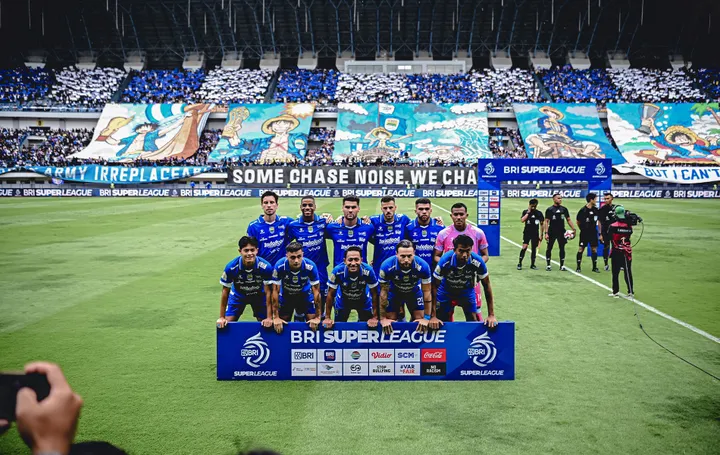
Strategic moves by professional football clubs to strengthen financial structures and corporate governance continue to capture the interest of national sports industry observers. Discussions surrounding the public offering plans for persib bandung to bring PT Persib Bandung Bermartabat onto the Indonesia Stock Exchange have resurfaced as the national sports business landscape matures. This corporate initiative represents a pivotal step toward transforming the West Java club into a more professional, self-sustained, and accountable commercial entity.
Although discussions regarding listing on the capital market have circulated for years, club management continues to carefully calculate all regulatory prerequisites.
Initial concepts regarding public ownership of club shares were registered and discussed internally as far back as 2011.
Board members maintain that building a healthy commercial foundation makes the prospect of going public increasingly realistic over time.
However, the regulatory path toward an initial public offering demands thorough administrative and legal readiness from the organization. Financial market authorities emphasize that any corporate entity must fulfill comprehensive documentation and strict financial transparency criteria before entering official pipelines. Consequently, the club currently remains focused on meticulous internal consolidation and strategic planning.
Asset Consolidation Strategies and Club Valuation Estimates
A core pillar underpinning the public offering plans for persib bandung involves optimizing and consolidating commercial assets. Managing major sports facilities such as the Gelora Bandung Lautan Api Stadium alongside surrounding commercial zones holds immense economic potential when executed under a unified strategy. Developing commercial precincts, training facilities, and integrated entertainment zones is projected to significantly elevate corporate valuation among potential investors.
Should these commercial assets be fully consolidated and optimized, business valuations for the club could reach approximately one trillion rupiah.
This substantial valuation benchmark naturally serves as a strong magnet for both retail and institutional investors during official share offerings.
Furthermore, a public listing opens rare opportunities for dedicated supporters, known as Bobotoh, to acquire genuine equity stakes in their beloved club through formal market channels.
Direct public ownership fosters a deeper emotional connection and shared responsibility between supporters and club leadership.
Nevertheless, technical specifics concerning retail allocation, initial share pricing, and offering timelines remain subject to future official announcements by shareholders and corporate directors.
Long-Term Benefits and Football Industry Transformation
Realizing the public offering plans for persib bandung promises substantial long-term benefits for sustainable financial growth. Fresh capital raised through capital markets can be earmarked for modern infrastructure projects, youth academy expansion, and upgraded medical and training facilities.
Beyond capital acquisition, operating as a publicly traded company mandates strict adherence to good corporate governance and transparency standards.
Obligations to publish periodic financial reports and maintain open disclosures will elevate managerial operations to international standards.
Modern football business models no longer rely solely on matchday ticket sales, depending instead on diversified commercial streams spanning sponsorship, merchandise, digital content, and facility management.
The viability of listing football entities on national stock exchanges was previously demonstrated by Bali United during their successful market entry in 2019. That milestone proved that domestic sports clubs possess viable commercial appeal when managed under proven corporate frameworks.
Final decisions regarding formal registration rest with major shareholders, even as public offering plans for persib bandung continue to advance behind the scenes.
Thorough preparation regarding legal filings, asset alignment, and risk assessment remains ongoing to ensure a seamless transition into a public entity. This journey marks an important milestone that could inspire other domestic football clubs to transition toward a sustainable, market-driven sports industry.