


The Indonesian Migrant Worker Protection Agency (BP3MI) of South Sumatra facilitated the return of a 4-year-old girl named Nur Iramaya binti Abdullah to her family in Kali Berau Village, Bayung Lencir District, Musi Banyuasin Regency, South Sumatra, after being left neglected in Malaysia due to her foster parents being entangled in legal issues, Sultan Mahmud Badaruddin II Airport Palembang, Thursday (21/5/2026). Handling this urgent case proves that attention to human rights knows no national territorial boundaries. The complexities of international bureaucracy were successfully unraveled thanks to a strong commitment to saving the future of the younger generation caught in the vortex of legal conflicts abroad. Through a rapid response from various related institutions, the execution of this crucial migrant worker child repatriation program was able to run safely without any meaningful obstacles.
The return of the Indonesian Migrant Worker’s child is a real portrait of cross-border and cross-agency cooperation in ensuring the protection of Indonesian citizens, including the children of Indonesian Migrant Workers who are in vulnerable situations abroad. Proper psychological assistance is heavily required for early childhood individuals who experience such traumatic separation events so that their growth and development are not disrupted. The active involvement of sociologists and humanitarian activists in the field also accelerated the environmental adaptation process for the child post-return. Regular monitoring of the child’s social condition in the new living environment has become a follow-up agenda that must be carried out consistently.
Nur Iramaya’s case began when authorities in Malaysia discovered that the party who had been caring for the child was facing legal problems. This condition then triggered an identity investigation by the Consulate General of the Republic of Indonesia in Johor Bahru. From the results of the search, it was found that Nur Iramaya’s biological parents were residents of Kali Berau Village, Musi Banyuasin, who had previously worked in Malaysia and returned to Indonesia in 2024. The discovery of this authentic data became a bright spot that unraveled the tangled threads of the child’s citizenship status under international law.
Administrative Chronology and Handover Process in Palembang
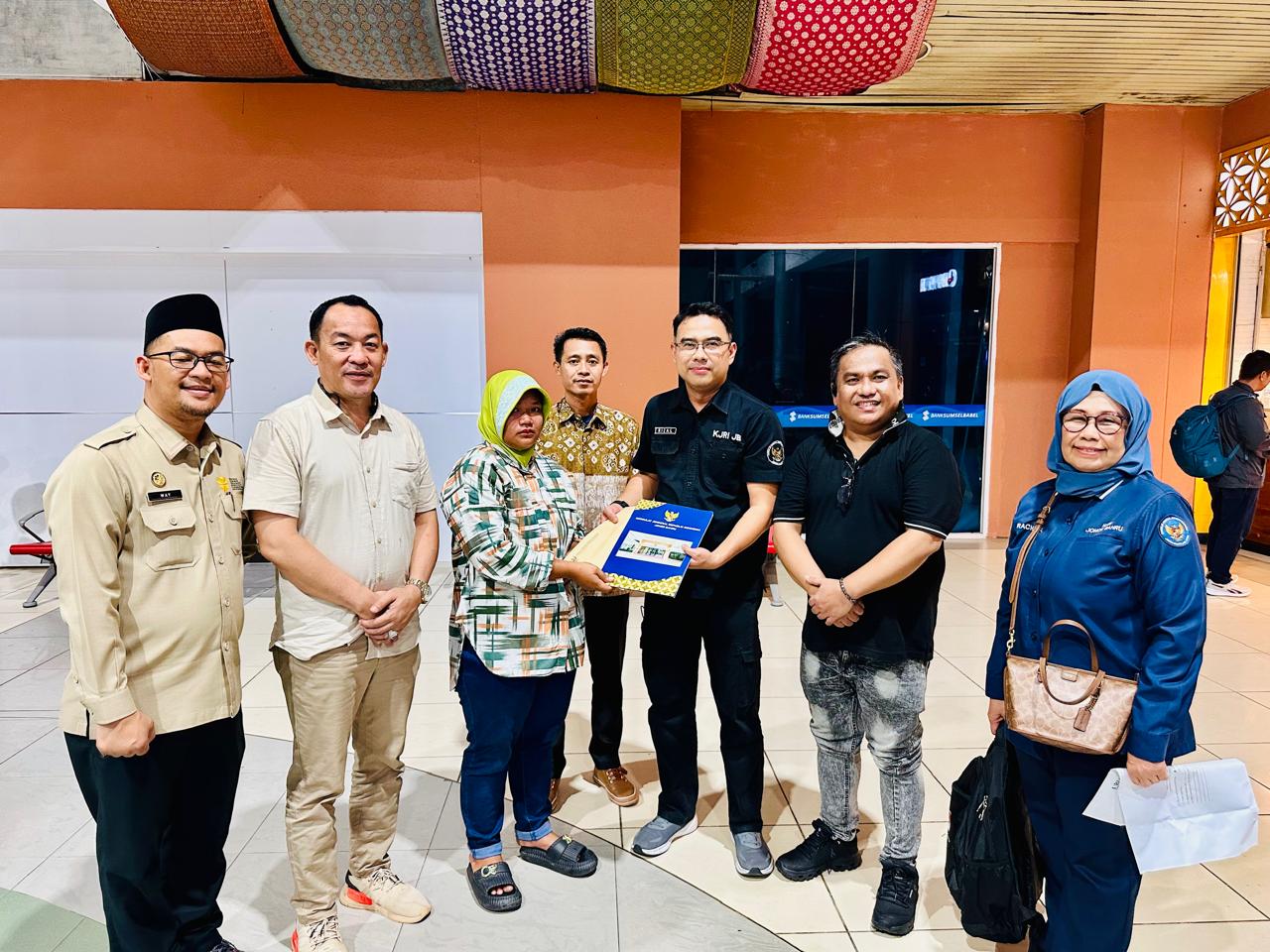
After the administrative and identity verification processes were completed, Nur Iramaya’s return was facilitated by the Consulate General of the Republic of Indonesia in Johor Bahru until she arrived in Palembang. Her arrival was welcomed directly by BP3MI of South Sumatra together with the Regional Government of Musi Banyuasin Regency. The presence of regional officials at the airport arrival gate shows that the humanitarian affairs of remote citizens receive the same portion of attention as other strategic projects. Every immigration document draft was checked thoroughly to ensure that the civil rights of the child had been fulfilled perfectly.
Also present at the reception were the Head of the Musi Banyuasin Manpower and Transmigration Office, Herryandi Sinulingga, the Head of Bayung Lencir Sub-district, the Head of Kali Berau Village, and Nur Iramaya’s extended family. The handover procession was filled with tears of joy when the family finally embraced the child who had been separated across nations. This emotional moment is concrete proof that blood ties will never be broken by distance and time. For the public who want to know the official procedures for repatriation or the overseas worker protection guarantee programs managed by the government, periodic information can be accessed through the official platform of the Badan Pelindungan Pekerja Migran Indonesia for public transparency.
The tactical steps shown by this joint team are expected to become a reference for handling similar cases in the future. The use of population data tracking technology integrated between social agencies in the regions and overseas representatives has proven capable of shortening bureaucratic time significantly. The speed of handling this administration is very crucial considering the psychological condition of the child who needs a definitive sense of security from her own biological family.
Evaluation of Protection Policies and Ongoing Assistance
The Head of BP3MI South Sumatra, Waydinsyah, emphasized that the state must not ignore the protection of Indonesian Migrant Workers’ children, especially in situations of neglect abroad. “Pemulangan ini bukan sekadar proses administrasi, tetapi bentuk nyata kehadiran negara dalam melindungi warga negara Indonesia, khususnya anak Pekerja Migran Indonesia yang menghadapi situasi darurat di luar negeri. Kami memastikan proses pendampingan berjalan sampai anak kembali dengan aman ke keluarganya,” said Waydinsyah. This affirmative policy must be maintained as a form of implementing the constitutional mandate to protect the entire Indonesian nation. The success of this migrant worker child repatriation agenda sets a new standard in embassy advocacy services.
He added that coordination between Indonesian representatives in Malaysia, local governments, and BP3MI was the main key to the success of the return process. “Kami mengapresiasi langkah cepat KJRI Johor Bahru serta dukungan Pemerintah Kabupaten Musi Banyuasin. Sinergi seperti ini sangat penting agar setiap warga negara yang membutuhkan perlindungan dapat segera tertangani,” added Waydinsyah. This harmonious cooperation proves that sectoral barriers between institutions can be dissolved for the sake of saving a single citizen’s life.
The Head of the Manpower and Transmigration Office of Musi Banyuasin, Herryandi Sinulingga, stated that local governments have a moral responsibility to ensure that citizens returning from migration issues can return to living a decent life. “Anak ini adalah bagian dari masyarakat Musi Banyuasin. Pemerintah daerah hadir untuk memastikan proses pemulangan berjalan aman dan keluarga mendapatkan pendampingan yang diperlukan,” said Lingga. Ensuring the fulfillment of education and health service rights for the child has now become a shared responsibility of related agencies at the regency level.
Meanwhile, on a separate occasion, the Regent of Musi Banyuasin, HM Toha Tohet, assessed that Nur Iramaya’s return serves as an important reminder regarding the vulnerability of migrant worker families abroad. “Kami bersyukur anak ini akhirnya dapat kembali ke desa dan berkumpul bersama keluarganya. Pemerintah daerah akan terus berkoordinasi agar keluarga mendapatkan perhatian dan pendampingan lanjutan,” said Tohet. This commitment from the regional leader is expected to trigger local economic empowerment programs so that former migrant workers do not need to return abroad illegally.
In the midst of the moving atmosphere, Nur Iramaya binti Abdullah’s biological mother could not hold back her tears upon receiving her child back. “Saya sangat bersyukur anak saya akhirnya bisa kembali. Terima kasih kepada pemerintah Indonesia, KJRI Johor Bahru, BP3MI Sumatera Selatan, dan semua pihak yang sudah membantu kami,” she uttered softly amidst her sobs. This expression of deep gratitude simultaneously closed a long chain of winding humanitarian diplomacy struggles. This event reinforces that migrant worker issues are not just about placement of labor across countries, but also concern the protection of families, children, and fundamental citizen rights. Behind the migration numbers of Indonesian workers, there are human stories that require the state’s tangible presence down to the most vulnerable points through the realization of a comprehensive migrant worker child repatriation plan.