


The dynamic landscape of the summer transfer window frequently delivers monumental movements capable of reshaping European football’s hierarchy. Spanish giants Barcelona executed one of the most significant moves of the decade by securing the signature of Manchester City’s star midfielder ahead of the 2026/2027 campaign. Conducting a thorough rodri transfer to barcelona analysis reveals how this landmark deal impacts both domestic title races and continental ambitions.
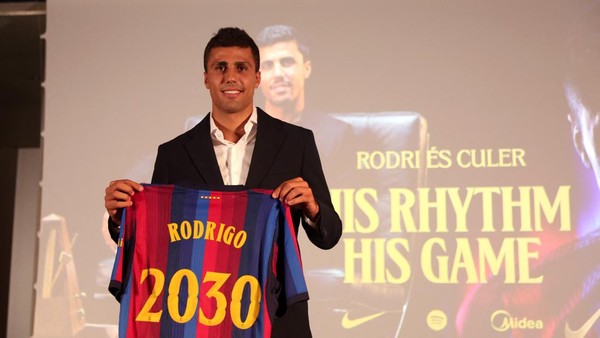
The Spanish international officially penned a long-term contract with the Catalan club, securing his presence at Camp Nou through June 2030.
Manchester City agreed to release the 30-year-old midfielder for a transfer fee valued at approximately 65.4 million pounds, equivalent to nearly 88.6 million US dollars.
The acquisition represents far more than a standard roster upgrade for Hansi Flick’s tactical setup. Barcelona successfully landed the 2024 Ballon d’Or winner, who served as the fundamental anchor during Manchester City’s historic domestic and European dominance over recent campaigns.
The elite midfielder brings invaluable leadership and big-match experience to the Blaugrana dressing room. During his tenure at Manchester City, he accumulated 298 official appearances while lifting 14 major trophies, including four Premier League titles and a Champions League crown.
Midfield Balance and Winning the Clásico Transfer Battle
While Barcelona possesses an extraordinarily talented young core anchored by creative figures like Pedri, the squad desperately required an experienced central figure to regulate match tempo. In this regard, any tactical rodri transfer to barcelona analysis highlights how his arrival perfectly addresses Hansi Flick’s structural needs.
The Madrid-born midfielder possesses exceptional positional awareness, enabling him to dictate play from deep areas while effortlessly breaking up opponent counter-attacks.
His commanding presence in front of the defensive line provides creative midfielders greater freedom to venture forward without compromising central protection.
Furthermore, adapting to Spanish football poses no challenge, as he previously featured for Villarreal and Atlético Madrid before moving to England in 2019.
The battle for his signature also delivered a compelling off-field narrative between Spain’s two biggest clubs. Arch-rivals Real Madrid were heavily linked with the midfielder to bolster their central depth heading into the new season.
However, swift execution from the Catalan board ensured that this strategic rodri transfer to barcelona analysis swung firmly in favor of Camp Nou, effectively beating their rival to a marquee target.
Football analysts view the midfielder as the ideal long-term successor to Sergio Busquets, a role the club had struggled to fill since the legend’s departure. While sharing Busquets’ composure and distribution skills, the new signing arrives with an even broader resume featuring Champions League, Premier League, European Championship, and individual Ballon d’Or honors.
Manchester City’s Rebuild and the European Landscape
Conversely, losing such an influential figure represents a substantial setback for Manchester City’s operational stability. The timing proves particularly challenging as the Etihad club navigates a broader transitional phase under manager Enzo Maresca following recent managerial turnover.
In addition to losing their primary midfielder, City also parted ways with key defensive and midfield pillars such as John Stones, Nathan Aké, and Bernardo Silva during the same window.
Although Manchester City acquired Elliot Anderson to reinforce central areas, replacing a world-class anchor of this caliber cannot be accomplished overnight.
In contrast, this insightful rodri transfer to barcelona analysis indicates that Barcelona has positioned itself as a formidable contender across all major competitions. Hansi Flick’s squad now boasts an ideal balance between youthful athleticism and seasoned tactical maturity.
This combination provides Barcelona with the tactical resilience required to defend their LaLiga crown while mounting a serious challenge for European glory.
Ultimately, this high-profile transfer underscores how elite competition is decided by top-tier quality in central positions. The arrival of an elite midfielder elevates Barcelona’s tactical ceiling while signaling to European rivals that the Catalan club has firmly re-established its status at the summit of world football.